In April of this year the French HEMA federation (FFAMHE) successfully raised funds to acquire a very interesting but enigmatic piece of fencing history: a set of engravings apparently inspired by Lovino’s manuscript.
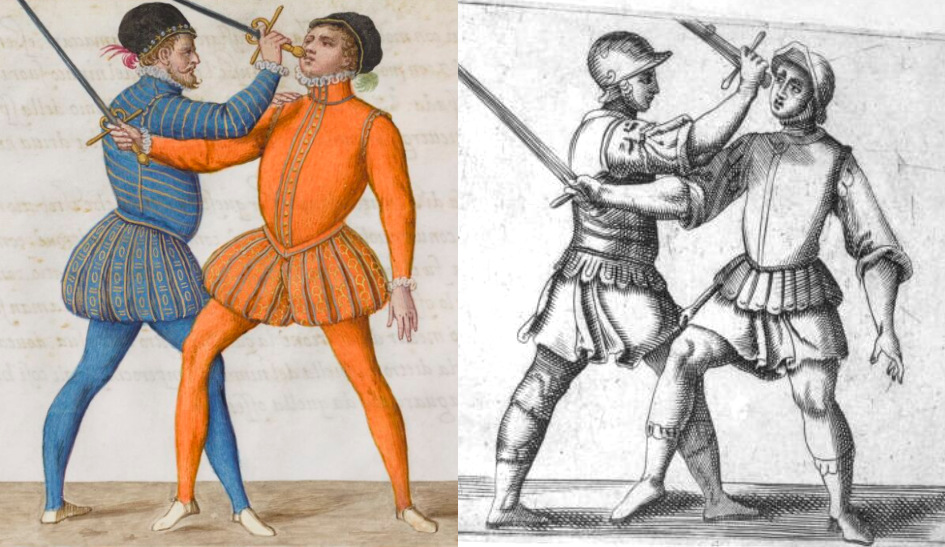
Little is known about these plates, other than they have been made sometimes during the 17th century. There is no accompanying text, no dedication, nothing that could indicate if they were part of a larger project. But it is clear that the artist who designed them had access to the manuscript, and did not want to just make a straight copy either: he changed the costumes and sometimes weapons, while remaining remarkably close in terms of positions and actions. In Lovino’s manuscript, fighters have names pulled out of Roman history, but are dressed according to 16th century fashion. In these plates, everyone is dressed according to the 17th century vision of antiquity.
It is also apparent, upon deeper inspection, that the project was not simply a straight copy with cosmetic changes: there are plates which do not match any in Lovino’s original. What was the author’s connection with Lovino? Was there a bigger project? Many questions that we cannot be sure to ever find the answer to.
Lovino’s text was long thought to be an isolated example in his own tradition, gifted to a king who did not care so much, without posterity. These plates show that there were certainly people who cared about that manuscript beyond artistic value.
What follows is my attempt at matching plates in the 17th century set with the originals in Lovino’s manuscript. In most cases it is very easy to recognize, and the order of the plates in not greatly modified, which guides the process. There are cases where the positions have been modified to a greater degrees. There are plates that do not match any as far as I could see. There is one very interesting case: plate 44 has been removed from Lovino’s manuscript, and this set of plates contains one that may very well have been drawn directly from it! So now, we have a fairly solid hypothesis about what it showed.
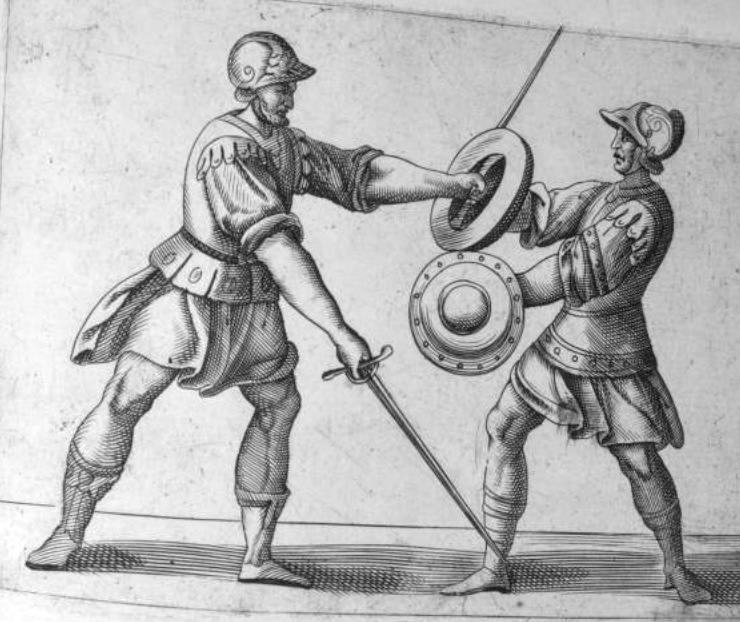
I will use the PDF scan page number as a reference. The vast majority of plates are also numbered in the upper right corner. I think most of them have been numbered in the lower left corner originally, but it has been erased on all but p.18: numbered 10 in the upper right, 12 in the lower left. The number in the lower left might have been the older one, but it’s hard to be sure. The number on the pages was not printed, so it might be a later addition, an indication for the book binder…
| Scan page | Upper-right number | Manuscript plate | Remarks |
|---|---|---|---|
| 7 | 1 | 1 | Change of perspective, only plate with contemporary clothing |
| 8 | 2 | 2 | |
| 9 | 3 | 3 | |
| 10 | 4 | 12 | |
| 11 | 5 | ||
| 12 | 5 | 6 | |
| 13 | 6 | 7 | |
| 14 | 8 | ||
| 15 | 7 | 9 | |
| 16 | 8 | 10? | The leg position is a bit different |
| 17 | 9 | 11 | |
| 18 | 10 | 57/58 | Numbered 12 in the lower-left corner. It is unclear which plate provided the inspiration, because of a change in perspective. However there are two “group fight” plates in the original, and two in the pseudo-Lovino, so it is tempting to match them |
| 19 | 11 | 13 | |
| 20 | 12 | 14 | |
| 21 | 13 | 23 | |
| 22 | 14 | 17 | With a mistake on the Right’s hand position |
| 23 | 15 | 18 | |
| 24 | 16 | 19? | Right’s hand position is wrong, but Left seems to be pronated, and the sequence matches |
| 25 | 17 | 20 | |
| 26 | 18 | 21 | |
| 27 | 19 | 22 | |
| 28 | 20 | 24 | |
| 29 | 21 | 25 | |
| 30 | 22 | 26 | |
| 31 | 23 | 27 | |
| 32 | 24 | 28 | |
| 33 | 25 | 29 | |
| 34 | 26 | 34 | |
| 35 | 27 | 35 | |
| 36 | 28 | 36 | Dagger on the wrong side of the opposing sword |
| 37 | 29 | 37 | Dagger on the wrong side of the opposing sword |
| 38 | 30 | 38 | |
| 39 | 31 | 39 | |
| 40 | 32 | 41 | |
| 41 | 33 | 42 | |
| 42 | 34 | 43 | Different sword position for Right |
| 43 | 35 | 44? | The original plate has been cut from the manuscript |
| 44 | 36 | 45 | |
| 45 | 37 | 46 | Different cut |
| 46 | 38 | 47 | Different shield, Right’s sword has been lowered |
| 47 | 39 | ? | |
| 48 | 40 | 49 | Different in the weapons interaction |
| 49 | 41 | 51? | But rather different |
| 50 | 42 | 52 | |
| 51 | 43 | 53? | But rather different |
| 52 | 44 | 54 | |
| 53 | 45 | ? | |
| 54 | 46 | 55? | Maybe illustrating a beat made from the position in the original manuscript? |
| 55 | 47 | 57/58 | It is unclear which plate provided the inspiration, because of a change in perspective. However there are two “group fight” plates in the original, and two in the pseudo-Lovino, so it is tempting to match them |
| 56 | 48 | ? | |
| 57 | 49 | 60/61 | With change of hands |
| 60 | 50 | 59? | With change of hands |
| 58 | 51 | ? | |
| 59 | 52 | 63? | Same sort of strike, but really different position |
| 61 | 54 | 66 |
There is no plate numbered 53 in the pseudo-Lovino. Again since we don’t know who wrote this number, it could well be a mistake and not an indication of a missing plate.
Aside from the repositioning of 12 and 23, the difficulties about the group fight plates, and a couple other minor details, the 17th century plates are remarkably similar to the manuscript up to page 46. After that the order is still roughly followed, but there are many modifications and even additions, and I am honestly not sure of how to match things up. This is puzzling in its own right. Why did the author suddenly feel the need to distance from the manuscript?
The pseudo-Lovino set of plates answers some questions, but raises many new ones. Artistically and technically, it is not of the same high standard as the original manuscript, but it gives depth to that work.


